Trying to photograph a dog who won’t sit, stay, or stop moving? You’re not alone. Whether it’s a zoomy puppy, an untrained rescue, or a wiggly senior who’s gone blind and deaf, many photographers struggle to get good photos of dogs who won’t stay still. Here’s the truth:
There’s no magic solution.
There are only three real options when working with dogs who won’t stay still:
Freedom. Management. Training.
Let’s talk about each.
Option 1: Freedom
Let the dog be wild and candid.
Great for puppies, seniors, or high-energy dogs
Can lead to joyful, authentic action shots
Requires open space, safe environment, strong camera skills, and a dog who will eventually come back.
Pros: Natural expressions, unique moments, less stress/pressure on the dog
Cons: Chaotic results, limited control, challenging in busy or unsafe areas, you mightn’t get the “magical” posed portrait photos you’re after
💡 Tip: Use a long lens (135mm or similar) to give the dog space while still filling the frame.
💡 Tip: Look for “natural pauses”, when the dog stops to sniff, look around, or catch their breath. Those are your moments.
You may need to let go of perfection, composition rules, and a technically correct photo, and just capture what genuine moments you can.
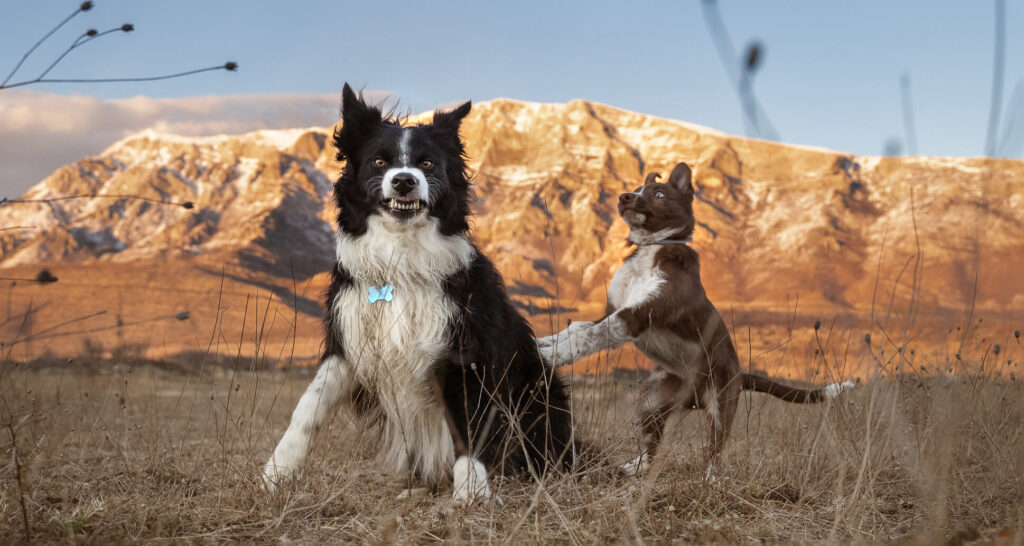
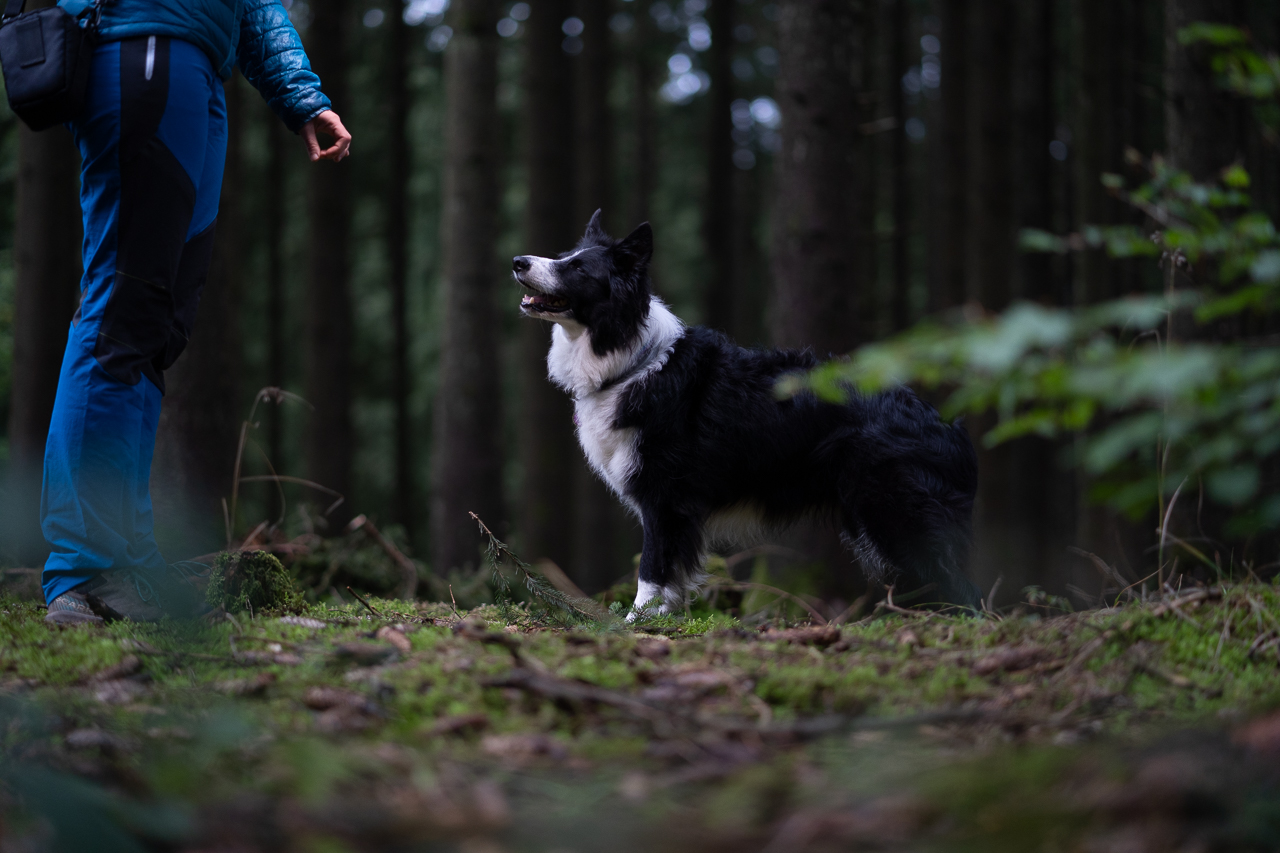
Before anyone comes at me, this is usually how Loki looks before he plays… Candid photos can be wild, they can be fun, they can capture genuine moments… but they’re for sure NOT easy and not your typical posed magical portrait.
🧭 Option 2: Management
When chaos isn’t safe or practical, you need to manage the situation. Sometimes, you WILL need to be firm with an owner, who just wants their dog to run around and have a good time. If this is a client, and they’re paying you for photos, you need to do what you need to do to get those photos. An hour or two on leash will not kill that dog.
Use a leash (yes, even for pro photos!)
Tie the dog to a tree or post if it’s your own dog & if they’re comfortable
Have a helper hold the lead just out of frame. Even if they’re in frame, once you’ve got the photos, tell them to move, snap a photo of the background, and edit them out
Pros: More control over location, composition, and safety
Cons: Editing out leashes or handlers can be time-consuming,
💡 Tip: Use a thin black show leash. Position the leash up high/to the side of the dog. Taught if possible. Have the owner far enough from the dog that there’s a gap between them. They don’t have to be out of frame.
💡 Tip: Keep sessions short. Breaks help dogs reset and reduce fidgety behaviour.
Want to go deeper? Frey’s Guest Talk on Dog Safety and Wellbeing is a goldmine for handling senior, reactive, or excitable dogs in safe, compassionate ways.
🎓 Option 3: Training
The following tips may not be applicable for:
- your brand new 8 week old puppy
- rescue dogs you do photos of at a shelter
- client dogs
However.. for your OWN dogs? Training has to be the best way to get the photos you’re dreaming of. My dogs aren’t robots. They didn’t come pre-installed with the ability to model. They choose to model because they’re paid well and love the job.
Here’s what matters most:
✅ Find a reward that works for that dog.
Not all dogs want liver treats. My dog Journey? Would trade a kidney for a crunchy leaf. Tailor your reward system to the dog: food, play, praise, whatever lights them up, and use that.
✅ Use a release cue and proof it.
Teaching the dog when they’re allowed to move is just as important as asking them to stay. “Okay!” means freedom, but only when they’ve waited until you give it.
✅ Play stay games everywhere.
Start small: ask for a stay at home, on a mat, for one second. Add distraction, distance, and duration gradually. Stay training is like muscle building: consistent reps = reliable results.
💡 Tip: Reward frequently and early, and vary the duration. Five seconds of staying still = reward. Then two, then seven, then three, then fifteen. Remember your release cue.
💡 Tip: Don’t rely on sit-stays only. Practice stands, downs, paws-up, whatever pose fits your shoot. Start with low distraction, distance and duration in new poses. Build from there.
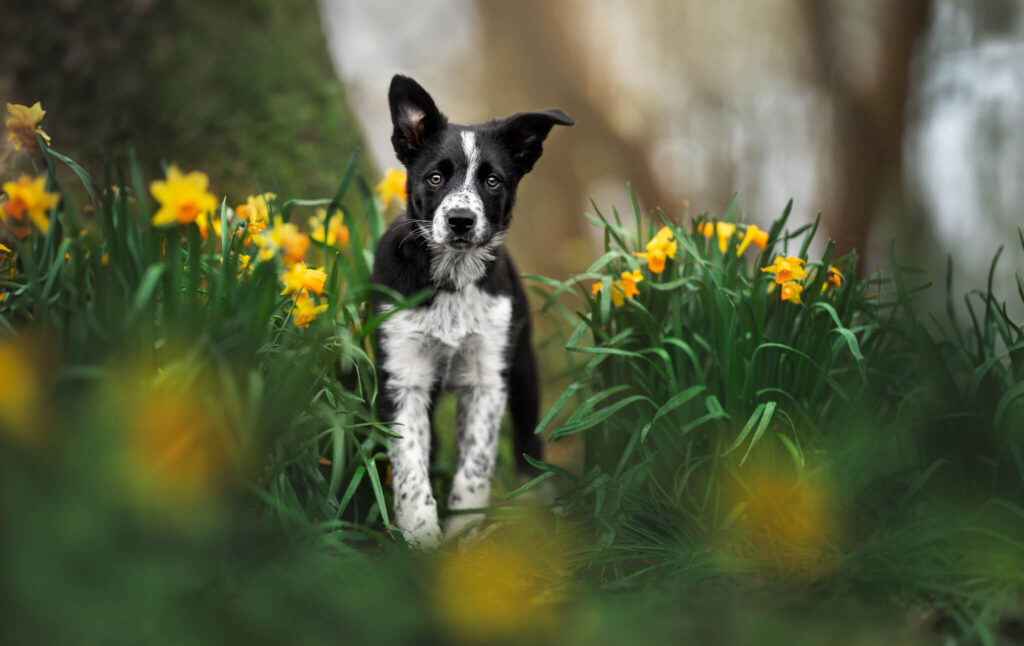
This is Hijinx. By about 16 weeks he could stay reliably enough for a few photos with a 135mm lens. We worked on this a little bit every day from 8 weeks old.
Final Thoughts: Chaos Is Normal — Planning Helps
Whether you choose freedom, management, or training (or a mix of all three), the most important thing is this:
Meet the dog where they are.
Some dogs need to move. Some need structure. Some just need a few crunchy leaves.
There’s no shame in using a leash. No rule that says every dog must sit still. And no photographer, not even the pros, has a secret fourth solution.
You’re not doing it wrong. You just have to look at the options in front of you and decide which is going to get the results you want, and make sure you have the skills to make it happen.
Not sure how to direct clients? Or stuck on how to edit them out of photos? The Learning Journey has lessons on everything you need to create and edit beautiful photos of pets. If the subscription is closed, the Lifetime option is available all year round! Check it out!