Most photographers learn composition through rules. The rule of thirds, golden ratio, leading lines. Framing. Symmetry. Giving the dog space to look into (this is one of my favourites!).
Those are helpful starting points. But if you’ve been photographing dogs for a while, you’ve probably noticed something frustrating: you can follow all the “rules” and still end up with an image that feels… off.
Pretty, maybe. But like something… isn’t quite… working.
That’s because composition in pet photography isn’t always about rules. Sure, sometimes when the photo is simple and straightforward, rules are great. But what about when you want to do something… more?
That’s when we need to decide what matters.
Visual Weight: What Feels Important?
Every element in your photo carries visual weight.
Things with more:
Light
Contrast
Detail
Saturation
Sharpness
Space
will feel more important.
Something that takes up 70% of your photo… will feel more important. Something shoved to one side… will feel less important.
So when something feels “off” in a photo, it’s often because the visual weight doesn’t match the story you’re trying to tell.
Here are a few common examples I see in the Learning Journey critiques.
1. When the Background Is a Character in the Story
Sometimes the landscape isn’t just “background.” It’s part of the narrative. It’s kind of the whole REASON for the photo. Not just: “oh another pretty forest, nice…” but…
You climbed that lookout because of the mountains.
You drove to the beach because of the cliffs.
You waited for that storm because of the sky.
In those cases, the environment isn’t decoration, it’s a character.
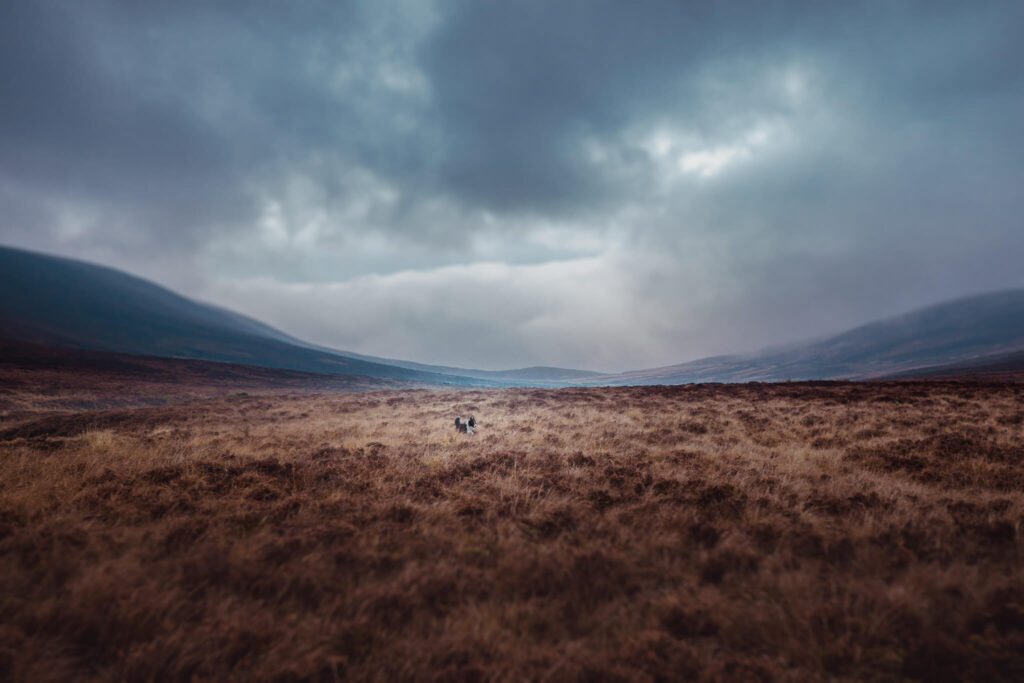
If the mountains are meant to feel vast and powerful, they need visual presence. That might mean showing more of them. It might mean not getting so low that bushes block them. It might mean allowing them to stay sharp enough to feel imposing.
If the cliffs are part of the story, but you blur them into oblivion and push them to the edge of the frame, the image loses part of its narrative weight.
Ask yourself:
Is this location part of the story? Or just a setting? Does it matter how much people see of it (like beach, mountains, cliff) or is it all just kind of the same pretty quickly?
If it’s part of the story, it deserves space and clarity.
2. When the Background Should Support, Not Compete
On the other hand, sometimes the background is just atmosphere.
Backlight sparkles. Soft bokeh. Pretty colours. A gentle wash of forest blur. The same forest exists 2, 5, 10, 20 meters away from your dog. It isn’t tall and imposing or in some ways exceptional.
These elements are beautiful… but they aren’t the protagonist.
If you dedicate 70% of the frame to sparkles and push the dog into the corner, the viewer’s eye will naturally settle on the brightest, largest area. The dog becomes secondary, even if that wasn’t your intention.
This is where visual restraint matters.
Keep the sparkles. Keep the glow. But ask:
Are they enhancing the dog… or stealing attention from it?
When the background’s job is to support, it should quietly frame the subject, not overpower it.
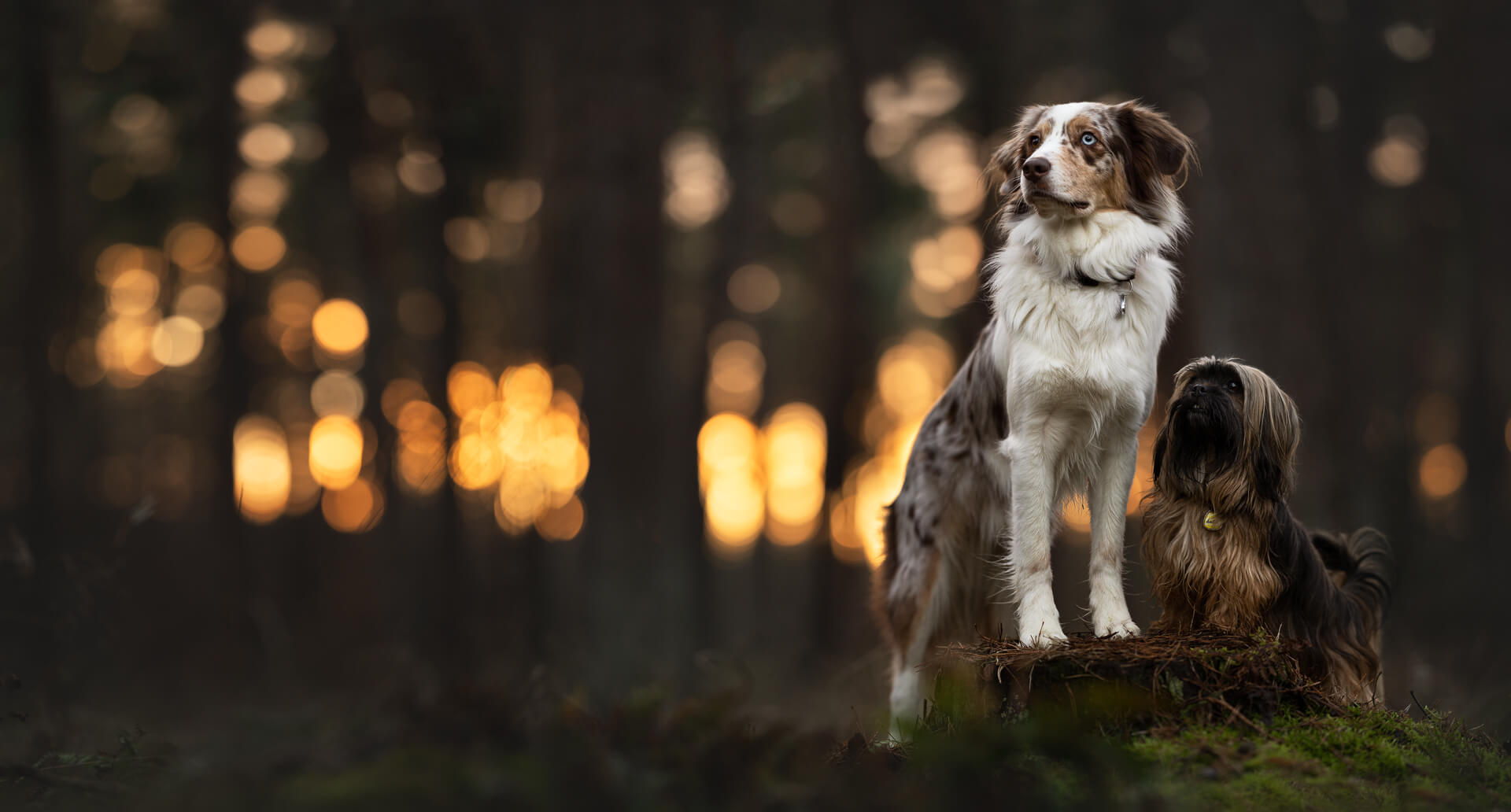
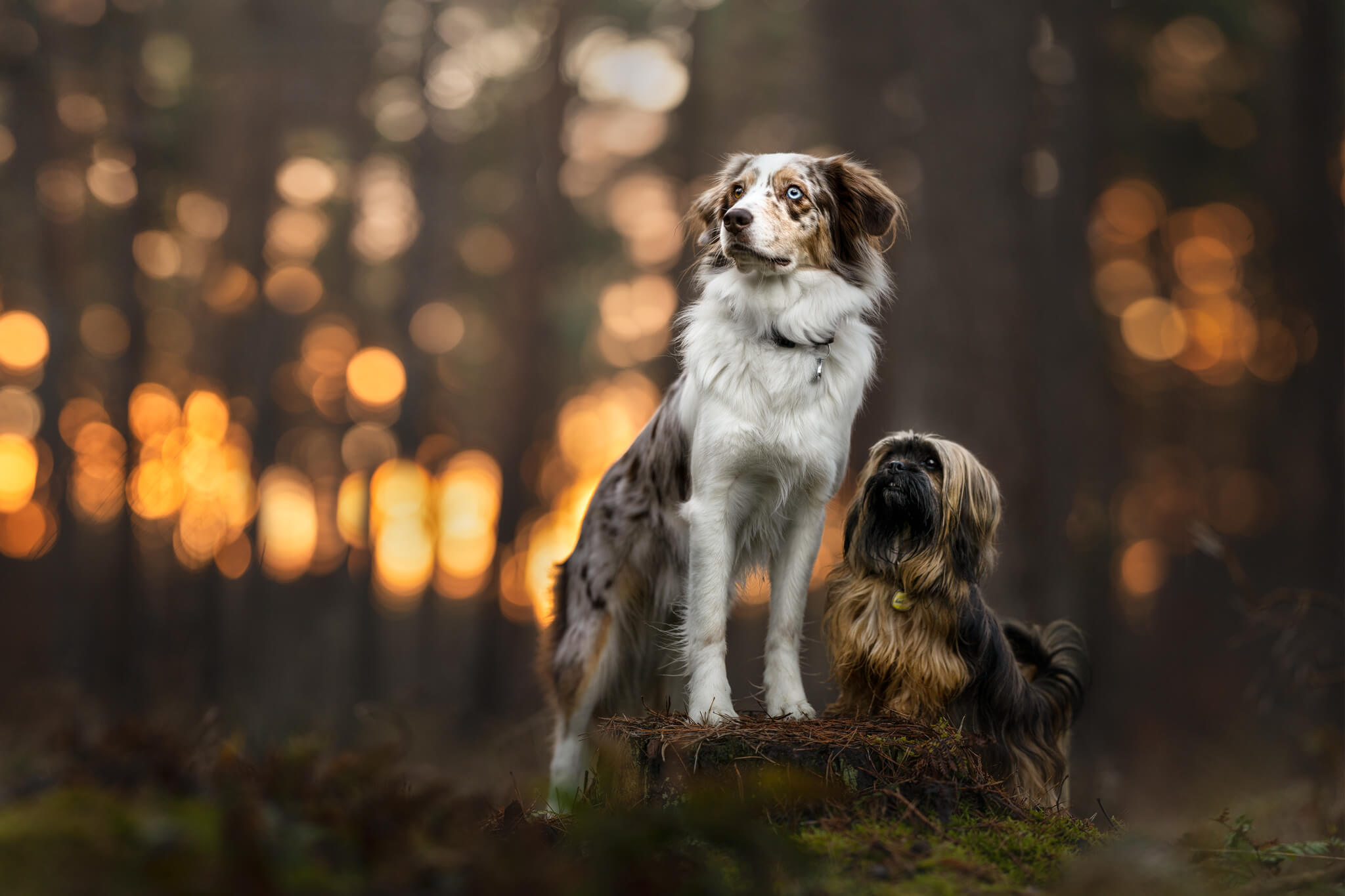
⬆️ Another VERY old image of mine (early 2020) where there’s a lot of things I’d do differently now… but after a VERY fast re-edit, I want you to consider where your focus is on the original image & edit, vs the newer one. What was I giving priority to back in 2020?
3. The Scene Doesn’t Match the Mood
You want something magical and mysterious, but the dog is sitting, facing forward, in an open, evenly lit space with no depth.
You want something grand and expansive… but the dog is tightly cropped and the epic mountains are barely visible.
You want something intimate and emotional… but the background dominates the space.
Composition shapes emotion.
How much space you give something dictates how important it feels. How much darkness surrounds your subject affects how dramatic it feels and dictates where the eye can go. How much environment you include changes whether the image feels personal or expansive.
Before you press the shutter, ask yourself:
What do I want the viewer to feel?
And what needs to be visually dominant for that feeling to land?
4. Where You Place Something Changes Its Importance
Position alone carries visual weight.
A subject placed dead center will usually feel stable, strong, and important. Our eyes naturally gravitate toward the center of a frame. That isn’t to say we can’t have a subject off to the side! If you’ve been here a while you know that I have side-looking subjects all the time… BUT…
Push that same subject to the very bottom of the image or squash it right up against an edge, and it immediately feels smaller. Less dominant. Maybe even insignificant.
Shove it into the far corner, and now the empty space becomes louder than the subject.
This isn’t about “never center your subject” or “always follow the rule of thirds.” It’s about understanding that placement changes meaning.
If your dog is meant to feel powerful, grounded, and central to the story, placing them low and small in the frame might undermine that intention.
If the landscape is meant to feel overwhelming and grand, placing the dog tiny at the bottom might be exactly the right choice.
But it should be a choice.
Before you press the shutter, ask:
If I moved the dog slightly higher, lower, or more central… how would that change the feeling of this image?
Sometimes composition isn’t about adding or removing elements. It’s about shifting them.
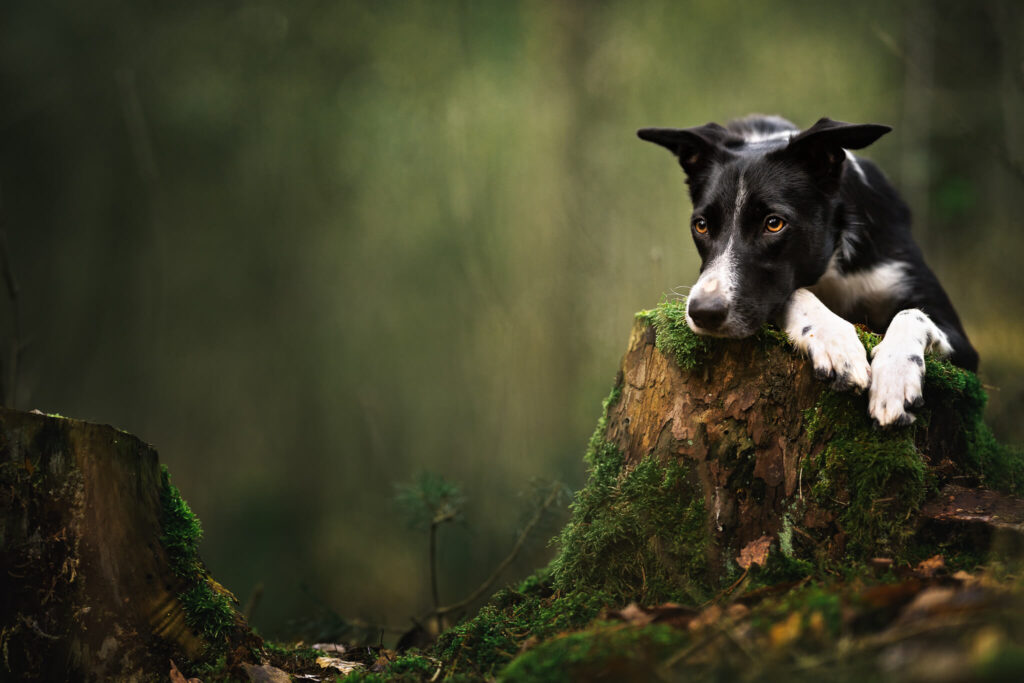
⬆️ Yup, another old photo here (late 2019?) and I see what I was trying to do and why… but by shoving the dog up against the side of the photo I’m really saying HEY! LOOK at all this empty space! Which… is kinda not the point.
5. Ask the Most Important Question
If you want to improve your pet photography composition, start here:
What do I want you to see?
Not just first. But overall.
Who are the characters in this scene?
Is it:
The dog alone?
The dog and the cliffs?
The dog and the vastness of the mountains?
The dog and a glowing pocket of light?
When you’re clear about that, your compositional decisions become simpler. You stop defaulting to rules and start making intentional choices.
And that’s when your photos begin to feel cohesive instead of accidental.
Want to See This in Action?
In my free live training, 3 Steps to Better Pet Photos, I’ll be breaking this down in a practical way. We’ll look at composition, light, and editing… and how small shifts in each can dramatically change the story your image tells.
If you’d like to join me,you can sign up here:
We’re LIVE March 27 and 29 at 20:00 CET, but a recording will be available!
We’ll keep it clear, actionable, and grounded in real examples.
Can’t wait to see you then!