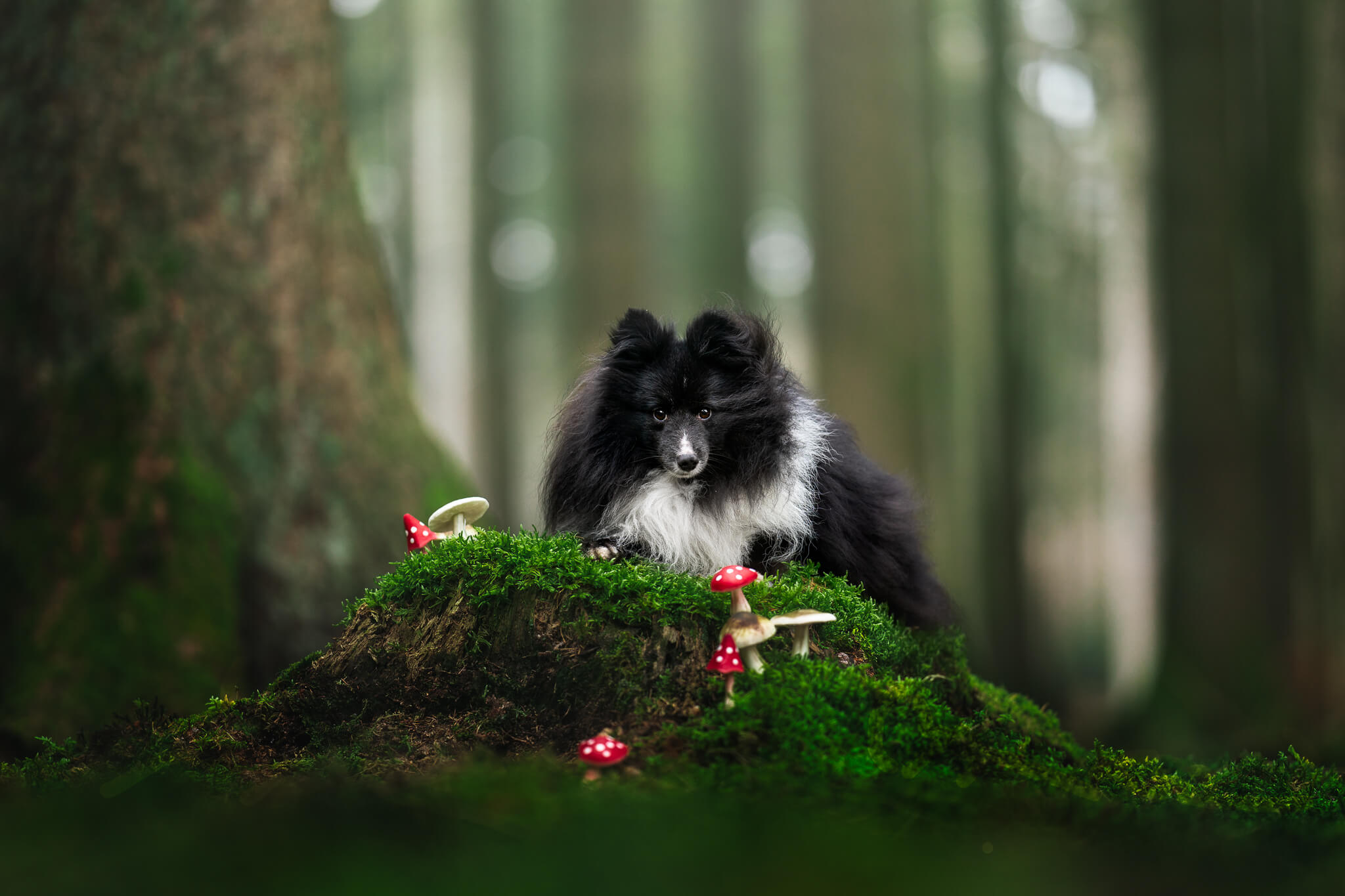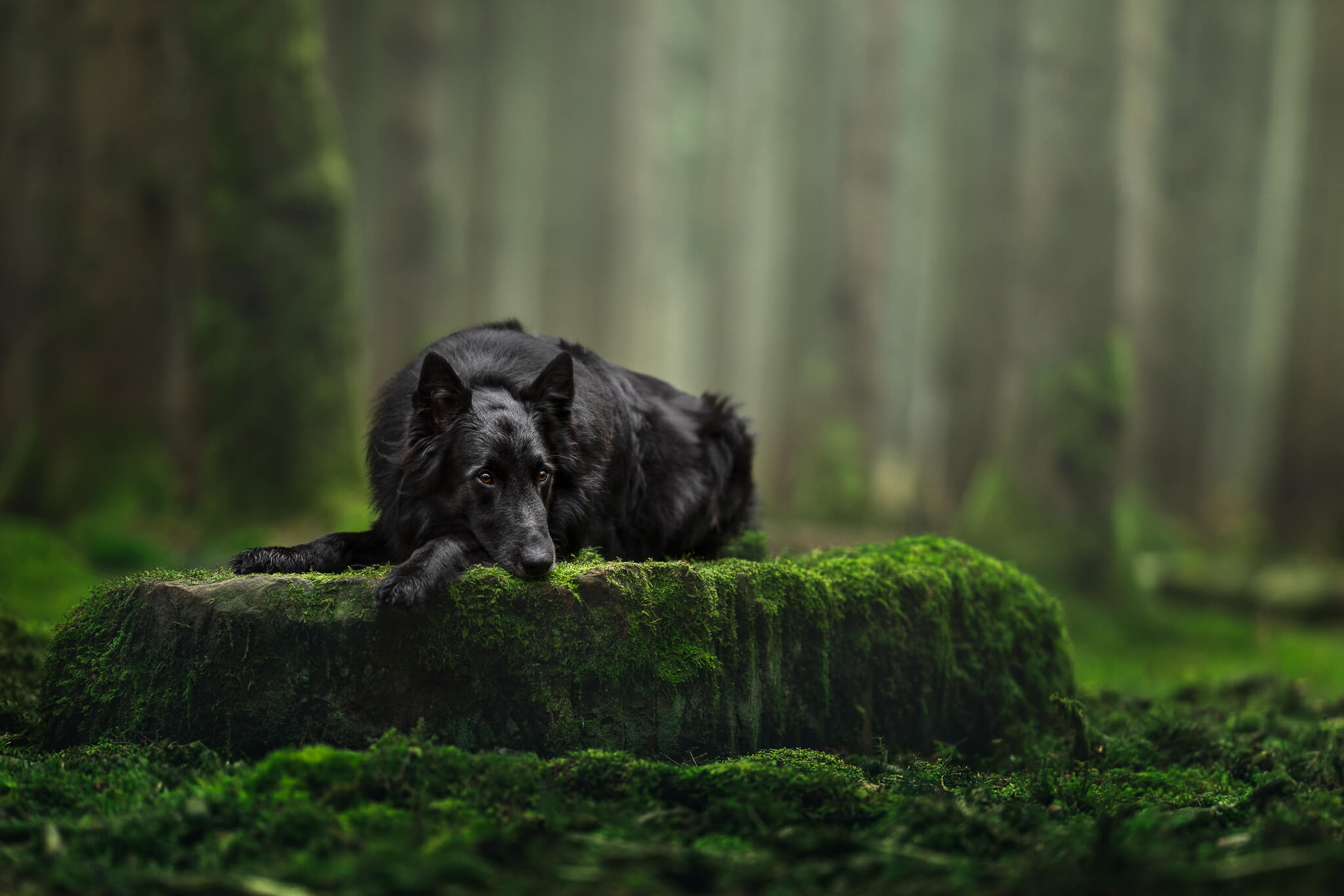
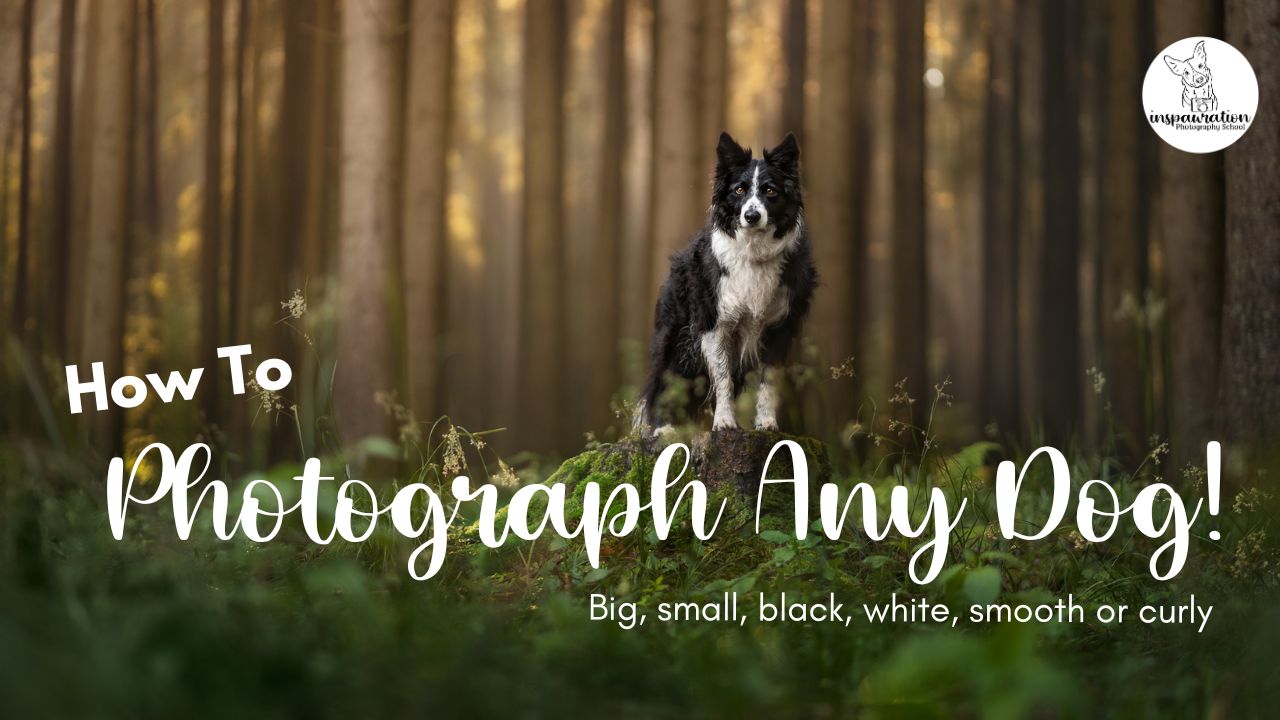
“Emily, how do I photograph [insert specific dog type here]?” Fluffy dogs. Tiny dogs. Giant dogs. Curly coats. Shiny black, glowing white, brindled, spotted, scruffy or smooth. Big, old, and everything in between.
You name it, I’ve been asked how to photograph it.
And here’s the simple, yet somewhat frustrating, truth: I don’t do anything radically different for any of them.
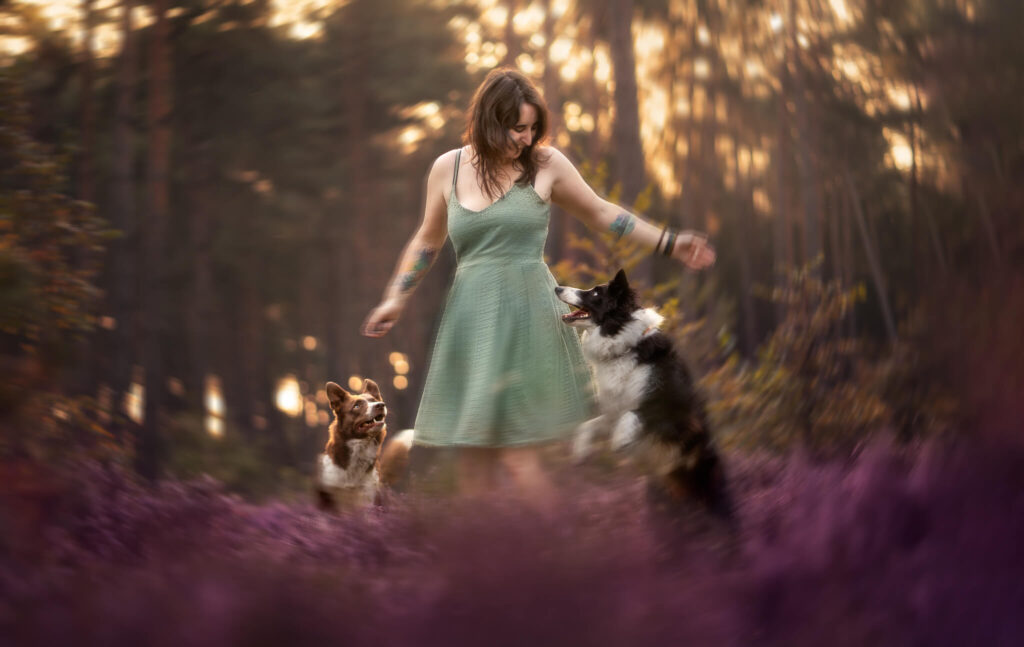
There’s no secret setting for black poodles. No ancient ritual for border collies (trust me on this one). No camera mode that makes a white dog less glowy.
Here’s what I do focus on:
- I work with the light: direction, quality, and availability.
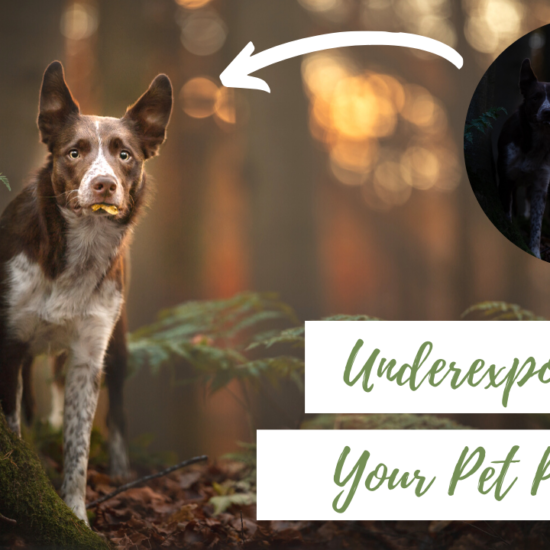
- I expose intentionally (and sometimes a little darker than is “correct”)
- I choose backgrounds that support the dog’s colour and coat.
- I position and frame thoughtfully based on size and distance.
- I remove colour casts in editing.
- I pay attention to what that dog needs, not the one in my mind.
Let’s break it down a bit more in this blog post. And please believe me – I’m not withholding any ground-breaking industry secret or keeping it behind a pay-wall. While you can learn the finer points of ALL the ideas we’re about to cover, and dive much DEEPER into all of it, it really is this straightfoward.
Framing, Distance, Perspective
The biggest shift I make isn’t in my camera — it’s in my perspective.
Small dogs often need to be elevated — a log, a rock, a bench — so they don’t get swallowed by grass, leaves or twigs.
Big dogs need space. You might need to step back further to keep them fully in frame.
Remember: the closer you are, the shallower your depth of field. That means focus will be razor thin with small dogs up close. For bigger dogs shot further back, more will stay sharp. That may mean more of your background is in focus.
- Pretty much all dogs will look better when you get down low. For tiny dogs, your camera is probably on the floor. For giant dogs, you may need to play with the height and angle. Try tilting your camera up.
No magic settings. Just practical adjustments.
Tiny dog (3.5kg) vs Big Dog (30kg?)…. basically the same photo.
Light: More Important Than Dog Colour
This is the secret sauce.
Whether I’m photographing a white Samoyed, a black Staffy, or a fluffy cream mix, I’m always asking:
Where is the light coming from?
How bright is it?
How is it interacting with their coat?
With white dogs or dogs with white stripes, faces, or collars, you’ve got to be especially careful with exposure. Even light that feels “just right” can be too bright.
When in doubt: just right is too bright.
Keep an eye on your highlights. Turn on zebra stripes or your histogram if your camera has them. Slight underexposure helps preserve detail in white coats, you can bring it up later in editing.
Remember: it’s always easier to bring back details in shadows, than it is in blown highlights.
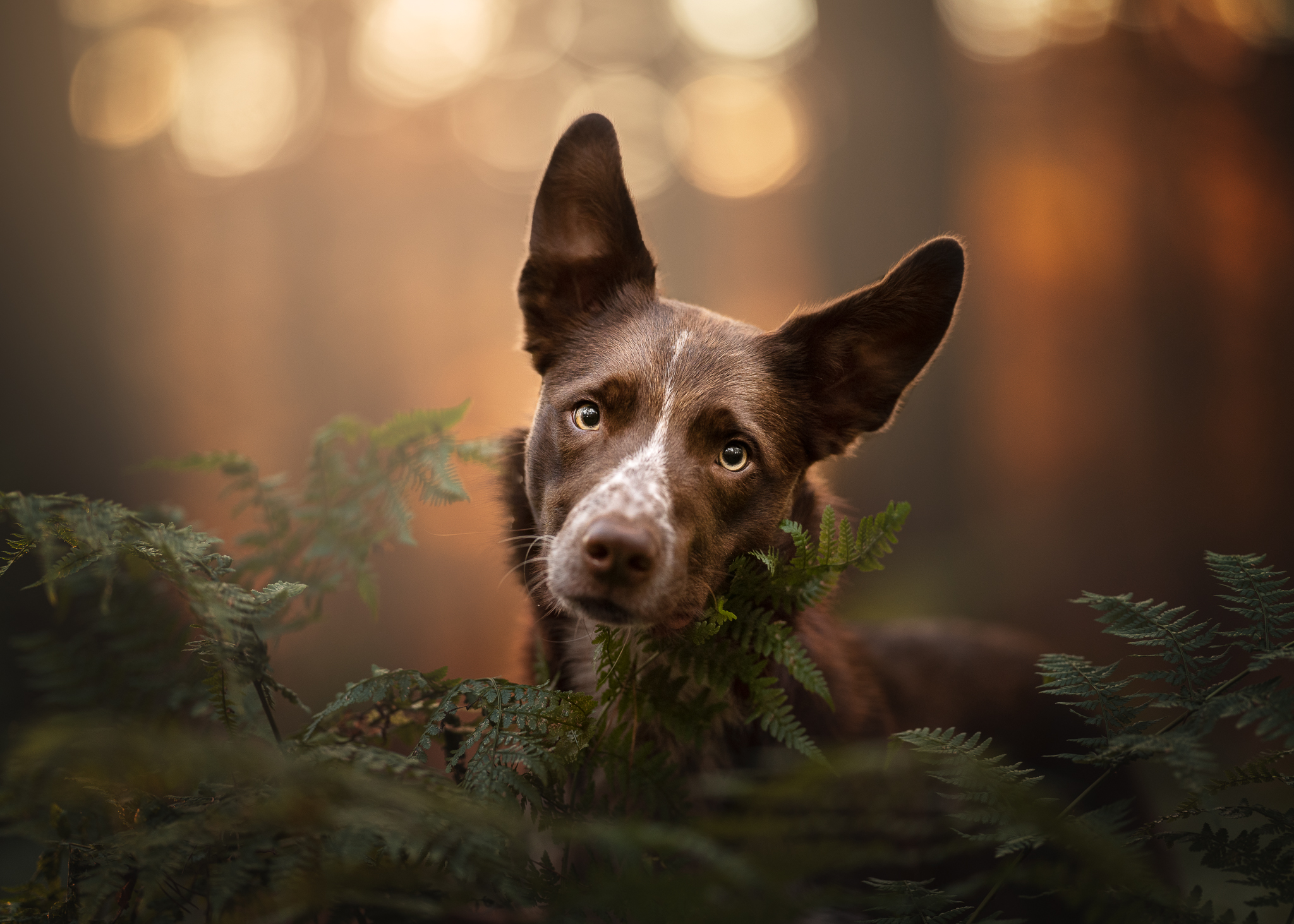
And most importantly (maybe?) all dogs, regardless of coat colour, texture, or size, need good ambient light on their face.
Not harsh light. Not patchy dappled sunlight. Not the middle of the deepest, darkest woods. Every dog looks better with a good amount of soft, ambient light on their face.
We cover light in much more detail in the Pet Photography Masterclass.
Gear, Settings & Exposure
There are no breed-specific camera settings. Full stop.
What matters is:
Your exposure (based on light and coat colour)
Your depth of field (based on how close you are and how many dogs are in frame)
Your shutter speed (especially for action, zoomies, or bouncy puppies)
Look at the situation in front of you. Do you have a fidgety puppy? Maybe raise that shutter speed.
Is the depth of field too narrow with your tiny chihuahua? Consider changing the aperture.
Are you photographing a white dog with some strong backlight? Consider changing your settings so the majority of the dog is slightly under-exposed, preserving details in the brightest parts of the fur.
Puppies, Seniors, and Dogs Who Just Won’t Stay
Okay, time for a truth bomb:
There is no magical solution to photographing untrained or hard-to-manage dogs.
You’ve got two options:
Let them be wild, and hope to catch candid moments. This can work beautifully, but only if you’ve got the location, the gear, and the reflexes.
Manage the situation.
Use a leash. Tie them safely to something. Have a helper.
There’s no shame in it. Every dog in my photos is either off leash because they’re safe, or the leash was edited out.
- Train them. Obviously this isn’t practical if it’s your brand new 8 week old puppy, or a client dog. But if it’s YOUR dog that doesn’t have a stay, training them to stay is a viable 3rd option.
There is no fourth option I’m withholding from you. This is it.
Sanji had had enough of posing so we let him zoom around and took some candids of him
Editing Adjustments (Not Overhauls)
All I’m doing in editing is responding to what’s there.
I remove colour casts (especially on white or black dogs). I want the coat to be the correct colour.
I lift shadows gently (not enough to grey out black dogs).
- I watch the highlights when brightening white dogs.
I add contrast where needed and guide the eye.
Fluffy, smooth, curly- coat type changes how light hits, but not the core process.
Final Thoughts: See the Dog First, Not the Challenge
It’s tempting to see a black dog and panic. To see a giant St. Bernard and wonder how to fit them in the frame. To meet a jumpy puppy and feel like you’re doing it wrong.
But you’re not.
The magic isn’t in the breed or the coat or the settings. It’s in how you see, and how you respond. How you build your skills. How you notice light and backgrounds. How you manage your settings and where you position the dog.
That’s the heart of what I teach in my Masterclass. Not just what buttons to press, but how to notice, adapt, and make intentional choices.
Want to Learn How to Photograph Any Dog, in Any Situation?
🎓 Join the Pet Photography Masterclass — my 5-hour foundational workshop in natural light, emotion-first dog photography. You’ll learn the skills to photograph any dog, in any light, with confidence.
📥 Grab the Free Pet Photography Guide — full of quick tips, gear insights, and practical advice for pet parents and beginner photographers alike.
Black dog? White dog? Puppy, senior, floof or gremlin? You’ve got this. Don’t overcomplicate things. You’re doing fine. ❤️
Until next time,
Emily, Loki & Journey